

Storyteller: The Little Red Hen
- 5 Stars
Add to My Folder
Watch, listen and then perform your own oral version of this traditional tale
When it comes to the primary classroom, oral storytelling has a crucial role to play. It gives children opportunities to internalise and play with the patterns and rhythm of language – and helps them to improve their memory and concentration. Through retelling and performance, the building blocks of a story are being provided to children in an accessible and dynamic way, allowing them to approach their own stories and written work with greater confidence and imagination.
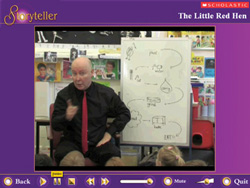
The Little Red Hen is a good example of a story that lends itself to classroom performance. It is simple to learn and children will find it easy to adapt and make their own. To accompany the classroom activities on these pages, an exclusive video clip and story text are available here. These resources have been taken from the new Storyteller series, published by Scholastic.
About the story
The story of The Little Red Hen has a wonderfully simple pattern and is an excellent story to be learned orally. You do have to watch that the children do not chant it so much that the rhythm takes over from the meaning. The story makes a very good first assembly for young children, as everyone can chant it together and there are a few parts to mime for those who feel confident.
Published 15 September 2008
-
Related resources

Reviews
Rated 5/5 from 28 ratings
You need to be signed in to place a review.
-
Paula @scholastic
on 24 February 2011Subscriber only
Sorry @c reddin
We really try and make as much as we can free to visitors but unfortunately our lovely website wouldn't survive without people subscribing to our magazines (either in print or online - an online sub works out at only .28p a week).
1out of 5 -
c reddin
on 22 February 2011little red hen
Why has Pie's brilliant oral story become unaccessible?!? I've used it many times before. How disappointing that everything, especially quality story telling comes at a cost these days.
-
enominis
on 3 November 2010lovely
I love all pie corbetts poems some sad some good.He is excellent I am a child in year 6.In leeds
-
Lol
on 26 September 2010Watch Little Red Hen
Actions to The Little Red Hen story. Perfect, just what I was looking for!
-
Kirstin McCreadie Assistant Editor
on 23 September 2010RE: Little Red Hen
Dear 3girls,
Thanks for your comment.
Our use of 'practise', 'emphasise' and 'organise' are correct for UK English, and as our site is based in the UK, we will always use UK spellings.
-
3 girls
on 22 September 2010Little Red Hen
This page has spelling errors. My daughter is always bringing home Scholastic homework with spelling errors and ill formed questions.
SPELL CHECK and EDITPractice
Emphasize
Organize
-
kazzied
on 7 May 2010Pie inspires
If you can, please go and see him.
I had the chance last year and have used his format, the children have progressed so much just in three sessions. Thank you Pie5out of 5

Dina
on 20 September 2012
Little Red Hen
Great ideas, I will use them next week and let you know.
P.S. "Organize" is the American spelling. In the UK and British schools it is "organise"
Thank you